The main sewer line is the pipe everything else in the house depends on. It is also the one you never see, which is why problems with it tend to be advanced by the time they are obvious.
The good news is that it gives fairly distinctive warnings. The bad news is that they are easy to mistake for ordinary drain problems and clear repeatedly without ever addressing the cause.
The signs that point at the main line
More than one fixture backing up at the same time. This is the clearest indicator there is. A single blocked fixture is a local problem. Multiple fixtures affected together means the blockage is downstream of where their branches join.
The lowest drain overflows when an upstairs fixture is used. Water takes the lowest available exit. If flushing an upstairs toilet produces water in a ground floor shower or a floor drain, that is the main line telling you it cannot cope.
Gurgling in one fixture when another drains. Particularly a toilet bubbling when the washing machine empties. That is air being pulled through a trap seal because flow is restricted.
Sewer odour indoors or in the yard. Indoors it can also mean a dried-out trap or a blocked vent. In the yard it more often means the line itself has failed and waste is escaping into the soil.
A patch of lawn that is unusually green, soggy or sunken. Following the line route. Green because waste water fertilises, soggy because it is saturating, sunken because soil is washing into a break.
Repeat main line clogs. A line that blocks reliably two or three times a year has a physical cause. It is not bad luck and it is not what anyone is flushing.
Slow drains everywhere rather than at one fixture. A general slowdown across the house.
Why lines fail here specifically
Root intrusion. Roots follow moisture and find it wherever water is escaping from a crack or a loose joint. Once inside, they expand and catch solids. Important nuance: roots do not usually break sound pipe. The defect generally exists first and the roots exploit it. That means a root problem is usually also a pipe problem.
Soil movement. The expansive clay across much of Collin and Denton County swells when wet and shrinks when dry. Buried pipe moves with it. Over years that produces separated joints, offsets and sections that settle below grade.
Bellies and sags. A section sitting lower than the pipe either side holds standing water and solids permanently. Cabling clears the accumulation but not the low spot, so it refills. This is the single most common reason a line blocks on a schedule.
Material degradation. Cast iron corrodes from the inside out. Clay is vulnerable at the joints. PVC is durable but can be crushed or damaged during unrelated excavation work.
What to do while it is backing up
If sewage is coming into the property:
- Stop using water anywhere in the house. Every sink, shower and appliance cycle adds to what is coming back.
- Keep people and pets out of the affected area. This is a health hazard, not just a mess.
- Do not attempt to clear a main line with chemical drain products. They will not shift a root mass or a belly, and they create a hazard for whoever opens the line.
- Get a plumber out. This is one of the situations that genuinely justifies an emergency call.
Cleanup and disinfection come after the line is flowing, and significant contamination is usually a restoration job rather than a plumbing one.
The camera inspection is the whole game
If a main line has backed up more than once, stop paying to clear it and pay to find out why.
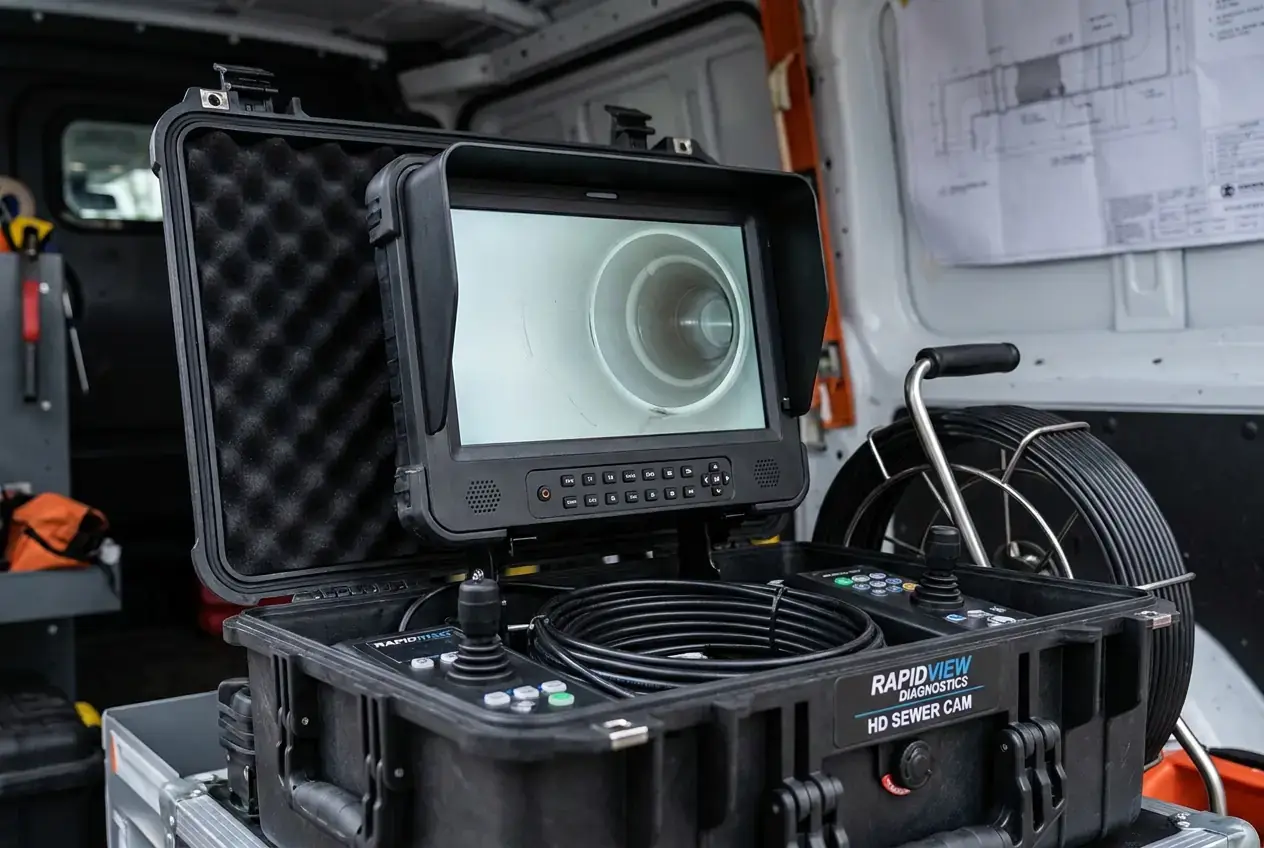
A camera run through a cleanout shows the interior of the line: whether there are roots and where, whether there is standing water indicating a belly, whether a joint has offset, whether a section has collapsed, and what the pipe material and general condition are. A transmitter on the camera head lets the plumber mark the position and depth on the surface.
That converts an open-ended problem into a defined one. It is also your protection in both directions: it stops you paying repeatedly to clear a line with a structural fault, and it stops you being sold a full replacement when one section is the actual problem.
Ask to see the footage. A reputable provider will walk you through what they found and where. If a company recommends replacement without inspecting the line, get a second opinion before agreeing to anything.
The repair options
Spot repair. Excavate at the marked location and replace the failed section. The least disruptive and least expensive option when the fault is localised and the rest of the line is sound.
Trenchless methods. Pipe bursting pulls a new pipe through the path of the old one; lining cures a new liner in place inside the existing pipe. Both minimise excavation, which matters a great deal if the line runs under a driveway, a patio or mature landscaping. Neither is suitable in every case, particularly where the line has badly collapsed or is severely misaligned.
Full replacement by open trench. Conventional excavation. Sometimes it is genuinely the right answer, particularly where the whole line has degraded or the depth and route rule out the alternatives.
Sewer work generally requires a permit and an inspection. The licensed plumbing contractor handles that as part of the job.
Who is responsible for which part
Property owners are generally responsible for the service line on their property, with the municipality responsible for the main it connects to. Exactly where that boundary sits varies by jurisdiction and sometimes by property, so confirm it with the Town of Prosper for your specific address before assuming a repair is yours to pay for.
Questions worth asking before you agree to work
- Can I see the camera footage of the problem?
- How far along the line is the fault, and how deep?
- Why this repair method rather than the alternatives?
- What is the scope if the pipe turns out to be worse than it looks?
- What is being restored afterwards, and what is not? Landscaping and hard surfaces are often excluded.
- Who pulls the permit and schedules the inspection?
- What is warranted, and for how long?
If any of this sounds familiar
The sewer line repair page covers diagnosis and repair in more detail. If the symptoms are limited to a single fixture, the drain cleaning page is the more relevant one.
To get a camera in the line, send a request describing which fixtures are affected and how often it has happened.