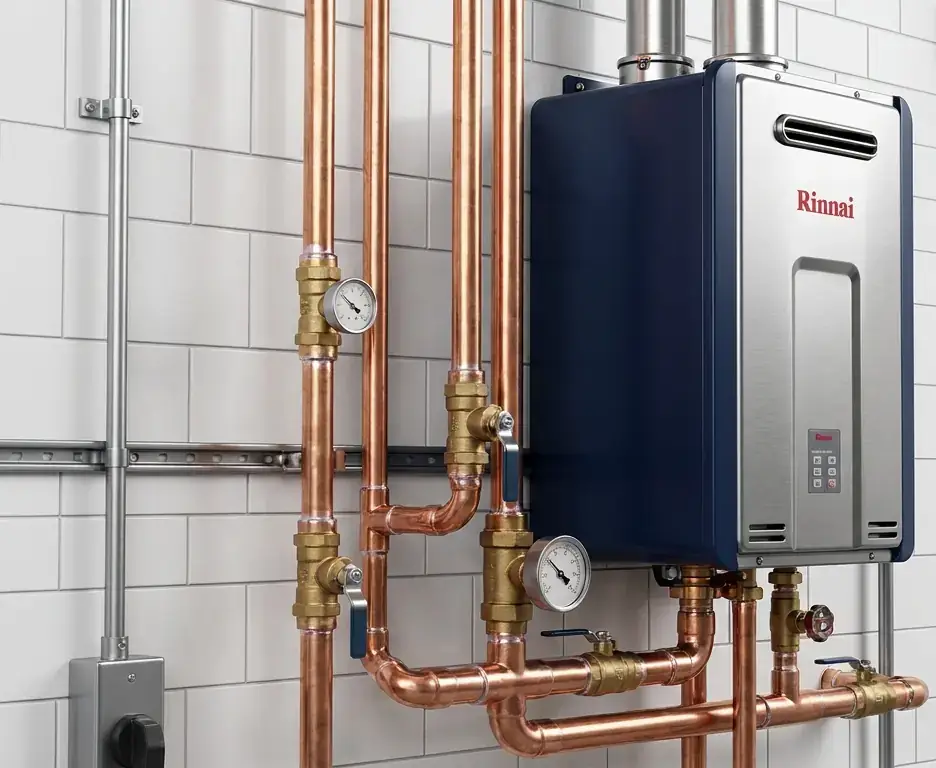
Which signal you have decides whether this is a repair at all. Elements, thermostats, anode rods, gas control valves and relief valves are all replaceable parts, and swapping one is routine work. A tank that has rusted through the shell is not a repair at any price, and no amount of work on the parts bolted to it changes that.
Repair or replace
The decision usually comes down to what failed and how old the unit is. Thermostats, heating elements, thermocouples, gas control valves, anode rods and relief valves are all replaceable parts. The tank itself is not.
Once a steel tank has corroded through, no repair returns it to service. A tank leaking from the body needs replacement. A leak at a fitting, valve or connection is usually a repair.
A conventional tank heater well past ten years that needs a significant part is worth pricing both ways before committing.
Common causes and problems
- No hot water at all
- On a gas unit this often traces to the pilot, thermocouple or gas control valve. On an electric unit a tripped high limit switch or a failed upper element are the usual suspects.
- Hot water runs out quickly
- Sediment reduces usable capacity, a failed lower element on an electric heater leaves only the top of the tank heated, and a broken dip tube sends cold water straight to the outlet.
- Rust coloured hot water
- Usually corrosion inside the tank or a spent anode rod. If only the hot side is discoloured, the heater is the source.
- Popping or rumbling from the tank
- Sediment on the tank floor trapping steam as the burner fires. It costs efficiency and puts extra stress on the tank.
- Water around the base
- It could be the relief valve discharging, a loose connection, condensation on a gas unit, or a tank that has failed. Telling those apart is the first job.
- Tankless unit showing an error code
- Codes point to ignition faults, flow sensors, scale buildup or venting problems. Scale is common where water carries a high mineral load and is addressed with a descaling flush.
Signs you may need water heater repair
None of these confirm a diagnosis on their own. They are the symptoms worth acting on rather than watching.
- Water takes noticeably longer to get hot than it used to
- Hot water has a metallic smell or a rusty tint
- Popping, rumbling or crackling from the tank
- Moisture, rust or staining at the base of the unit
- The relief valve discharges repeatedly
- Temperature swings during a single shower
- The unit is past its warranty period and has needed repairs before
If several of these apply at once, treat it as more urgent than any one of them would be alone.
What a repair visit typically covers
- Step01
Establishing the failure mode
Gas, electric and tankless units fail in different ways. The first step is working out what the unit is actually doing rather than what it is not doing.
- Step02
Testing components
Elements and thermostats on electric units, thermocouple, pilot assembly and gas valve on gas units, sensors and ignition on tankless.
- Step03
Checking relief and expansion
A temperature and pressure relief valve that keeps discharging often points to thermal expansion or high supply pressure rather than a faulty valve.
- Step04
Flushing sediment
Draining and flushing removes the mineral layer that causes rumbling and lost capacity.
- Step05
Replacing the failed part
Most common parts are carried on the truck. Sealed system components on some tankless units may need to be ordered.
Why this is a poor DIY project
Water heaters combine pressurised water with either high voltage or combustion gas and a flue. Mistakes show up as scalding water, carbon monoxide, or a tank failing under pressure.
Replacement and some repair work commonly requires a permit and inspection in North Texas municipalities. Confirm the current requirement with the Town of Prosper, and expect the licensed plumber to handle permitting as part of the job.
Manufacturer warranties are frequently voided by unlicensed installation. Keep the invoice along with the model and serial numbers somewhere you can find them.
Where this service is available
Requests are routed to plumbing professionals covering Prosper, TX 75078 and the surrounding communities across Collin County and Denton County.
The Prosper service area page covers the local conditions that affect plumbing here, including soil movement, slab construction and attic water heater installations. Each surrounding community has its own page, because the housing age and the ground underneath it are not the same in all of them.
- A Seasonal Plumbing Checklist for North Texas HomesA practical maintenance routine built around the conditions that actually affect plumbing here: hard freezes, expansive clay soil, hard water and irrigation.
- Tank or Tankless: Choosing a Replacement Water HeaterAn honest comparison of storage tank and tankless water heaters, including the installation constraints that usually decide it in North Texas homes.
- Water Heater Warning Signs Worth Acting OnWater heaters usually give notice before they fail. Here are the signals that matter, what each one typically means, and which ones justify a same-day call.
Water Heater Repair questions
How long should a water heater last?
A conventional tank heater commonly lasts somewhere around eight to twelve years, and tankless units generally last longer. Water quality, whether the tank was ever flushed, and whether the anode rod was replaced all shift that range.
Why is my hot water rusty?
If it is discoloured on the hot side only, the tank or the anode rod is the likely source. If both hot and cold are affected, the issue sits upstream of the heater in the supply piping or on the utility side.
Can a leaking water heater be repaired?
It depends where it leaks. Fittings, valves and connections are repairable. A tank leaking from the body itself has corroded through and needs replacement.
Should I flush my water heater?
Periodic flushing removes sediment and is generally recommended by manufacturers. North Texas water carries enough mineral content to make it worthwhile. Check the manual for your model, or ask the plumber to do it during a service visit.
Is a permit needed to replace a water heater in Prosper?
Water heater replacement typically requires a permit in North Texas cities and towns. Verify the current requirement with the Town of Prosper before work begins, and ask the plumbing company to confirm that they are pulling it.
Related services
- Water Heater ReplacementTank and tankless replacement, including sizing, attic installations, expansion tanks and permitting.
- Emergency PlumbingBurst pipes, active leaks, sewage backups and no-water situations that cannot wait for a scheduled appointment.
- Leak DetectionLocating hidden leaks with acoustic, pressure and thermal methods before anyone opens a wall or a slab.
- Pipe Repair and RepipingLeaking, corroded, frozen and burst pipes, plus rerouting and whole-house repiping when repairs stop making sense.