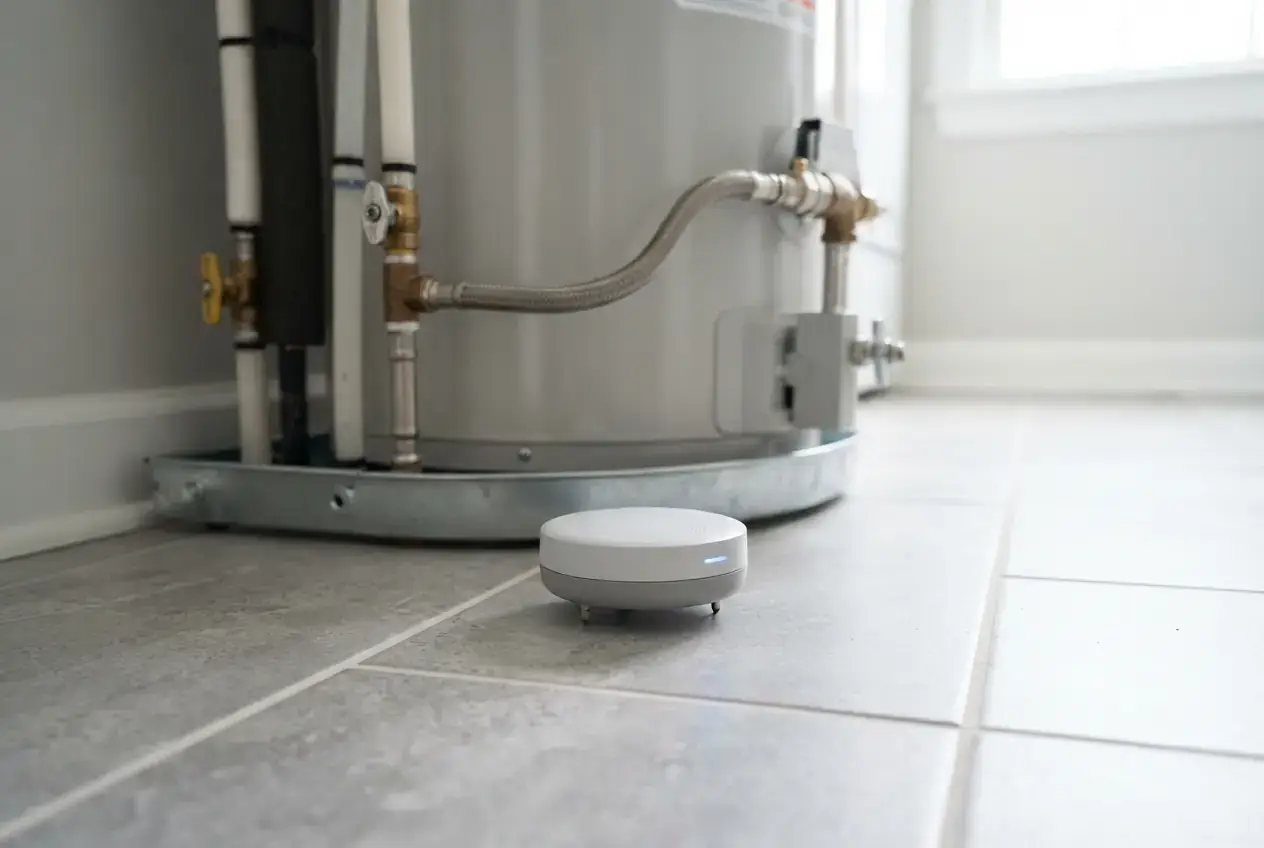
Detection is a separate job from repair, and doing it properly is what keeps the repair small. Acoustic listening, pressure isolation and thermal imaging narrow a leak to a specific run of pipe before anyone opens a wall or breaks concrete. Skipping that step is how a pinhole becomes an exploratory demolition.

Finding a leak without opening the house up
Leak detection is the diagnostic step that comes before the repair. The goal is to confirm a leak exists, then narrow its position closely enough that access can be cut in one place rather than several.
The tools vary with the situation: acoustic listening equipment that picks up water escaping under pressure, thermal imaging that reveals temperature differences behind a surface, pressure testing to isolate which system is losing water, and tracer gas for the difficult cases.
One useful test costs nothing. Turn off every fixture and appliance that uses water, then watch the meter. If it is still registering, water is going somewhere.
Common causes and problems
- Slab leaks
- A supply line running under or within the concrete foundation. Common across North Texas given how many homes are built on slab, and often noticed first as a warm patch on the floor or the sound of water with everything off.
- Leaks inside walls
- Staining, bubbling paint or a musty smell, usually at a joint or where a fastener has caught a line.
- Drain leaks under the slab
- Harder to find because drain lines are not pressurised, so there is no hiss to listen for. Symptoms can include damp flooring, settling, or sewer odour.
- Irrigation leaks
- Frequently the explanation for a high bill with no indoor symptoms at all. Often shows as a persistently soggy area or a zone that never dries out.
- Service line leaks
- Between the meter and the house. A strip of lawn that stays green or wet along the line route is a common giveaway.
- Toilet flapper leaks
- Not dramatic, but a silently running toilet wastes a surprising volume. A few drops of food colouring in the tank tests it in ten minutes.
Signs you may need leak detection
None of these confirm a diagnosis on their own. They are the symptoms worth acting on rather than watching.
- A water bill that jumps with no change in usage
- The meter still registering with everything shut off
- The sound of running water when nothing is on
- A warm or damp spot on the floor
- New cracks in drywall, tile grout or the slab edge
- A musty smell in one room or cupboard
- Water pressure that has dropped noticeably
- Mould or mildew reappearing in the same place
If several of these apply at once, treat it as more urgent than any one of them would be alone.
How a leak detection visit works
- Step01
Meter test and isolation
Confirming a leak exists, then closing valves to determine whether it sits on the supply side, inside the house, or in the irrigation system.
- Step02
Pressure testing
Isolating sections of pipe and watching for pressure loss, which narrows the search to a specific run.
- Step03
Acoustic detection
Listening equipment amplifies the sound of pressurised water escaping. This is how most slab leaks are pinpointed.
- Step04
Thermal imaging
Temperature contrast can reveal a hot water leak beneath a surface or moisture spreading through a wall cavity.
- Step05
Marking and reporting
A specific location marked for access, with the evidence behind the conclusion. The repair follows once the position is known.
Why detection is worth paying for as its own step
Cutting exploratory holes to find a leak is expensive in both repair and restoration, and it frequently misses. Paying for detection first usually lowers the total, because the access opening gets cut once, in the right place.
Detection also establishes what kind of leak it is. A pinhole in copper under a slab, a failed fitting behind a wall and a cracked drain line lead to three different repairs at three different prices.
Ask for the evidence: photographs, thermal images, or the marked location. It should be clear why the plumber is recommending that specific access point.
Where this service is available
Requests are routed to plumbing professionals covering Prosper, TX 75078 and the surrounding communities across Collin County and Denton County.
The Prosper service area page covers the local conditions that affect plumbing here, including soil movement, slab construction and attic water heater installations. Each surrounding community has its own page, because the housing age and the ground underneath it are not the same in all of them.
- A Seasonal Plumbing Checklist for North Texas HomesA practical maintenance routine built around the conditions that actually affect plumbing here: hard freezes, expansive clay soil, hard water and irrigation.
- Signs of a Slab Leak in a North Texas HomeHow to recognise a leak under a concrete foundation, why they are common in this region, and the checks you can run before calling anyone.
- Water Heater Warning Signs Worth Acting OnWater heaters usually give notice before they fail. Here are the signals that matter, what each one typically means, and which ones justify a same-day call.
Leak Detection questions
How do I know if I have a hidden leak?
The meter test is the fastest indicator. With every water-using fixture and appliance off, check whether the meter is still registering. If it is, water is escaping somewhere in the system.
Is leak detection destructive?
The detection itself is generally non-invasive, using acoustic, pressure and thermal methods. Access for the repair does mean opening a surface, but the whole point of detection is to keep that to a single correct location.
What is a slab leak?
A leak in a water line running under or through the concrete foundation slab. It matters in North Texas because most homes here are built on slab, and because prolonged leaking under a foundation changes the moisture conditions in the soil supporting it.
Could a high water bill just be irrigation?
Frequently, yes. A stuck valve or a broken head wastes a large volume with no indoor sign at all. Isolating the irrigation system at its shut-off and re-checking the meter separates the two quickly.
Will insurance cover a hidden leak?
Policies differ. Sudden accidental discharge is commonly covered while gradual seepage often is not, and access and repair may be treated differently from the resulting damage. Document everything and speak to your carrier early.
Related services
- Slab Leak RepairLocating and repairing water lines that have failed under the foundation, by spot repair or by rerouting.
- Pipe Repair and RepipingLeaking, corroded, frozen and burst pipes, plus rerouting and whole-house repiping when repairs stop making sense.
- Emergency PlumbingBurst pipes, active leaks, sewage backups and no-water situations that cannot wait for a scheduled appointment.
- Drain CleaningSlow or blocked kitchen, bathroom and main line drains, including camera inspection when a clog keeps coming back.